Showing posts with label FREEBIES. Show all posts

Saturday, March 14, 2015

Makin' it Math Mid-Month Linky -- March

Good day!  Thanks for stopping by for our Makin' it Math mid-month linky!
http://www.guided-math-adventures.com/p/makin-it-math-mid-month-linky.html

Wanted to share a few things that have been going on in the classroom and a few made-it to go with them...

First, we just had open house this past week and I asked my kids to reflect on their learning thus far this year with a "Glow & Grow". This is something that can be done any time during the school year.  Students simply write something they are able to do well after all of their hard work and help, and they write about something with continued effort is an area they will "grow"/improve. Loved to see some of the students' reflections about math!  Feel free to download a copy to use with your students.


Second, we explored fractions with pizzas this week.  I purchased Amy Lemons' Pizza Fractions and adapted it for my students.  We used all of the toppings and pizza template divided into fourths and added four toppings to cover one fourth, one half, three fourths, and the whole pizza.  Students began by choosing a topping to use on the whole.  Then a topping to use only on a fourth, on half, and finally three fourths.  Afterward, they completed the sheet shown below.  This really tested their understanding of equal-sized shares of a whole and how to represent fractions by adding toppings accordingly.  Not to mention, it was fun!  You can use the sheet I created with other pizza fraction activities, so snag it if you like.


Lastly, we explored fractions with foods (faux foods) this week in guided math groups.  Students are developing a solid understanding of fractions at the second grade level and LOVED using the foods.  I shared this made-it in a previous post, but I decided to share it again here.  So many possibilities for using these gems, so you will want to download them!

https://drive.google.com/file/d/0B_1w1VapXOL_Y0V6UGRaSmRoWU0/view?usp=sharing

Hope you find this month's made-it useful!  Have a blog and want to share your math-made its in a post? We would love to have you link up below!

All the best for the coming week--


Sunday, March 1, 2015

Read Across America Math Fun!

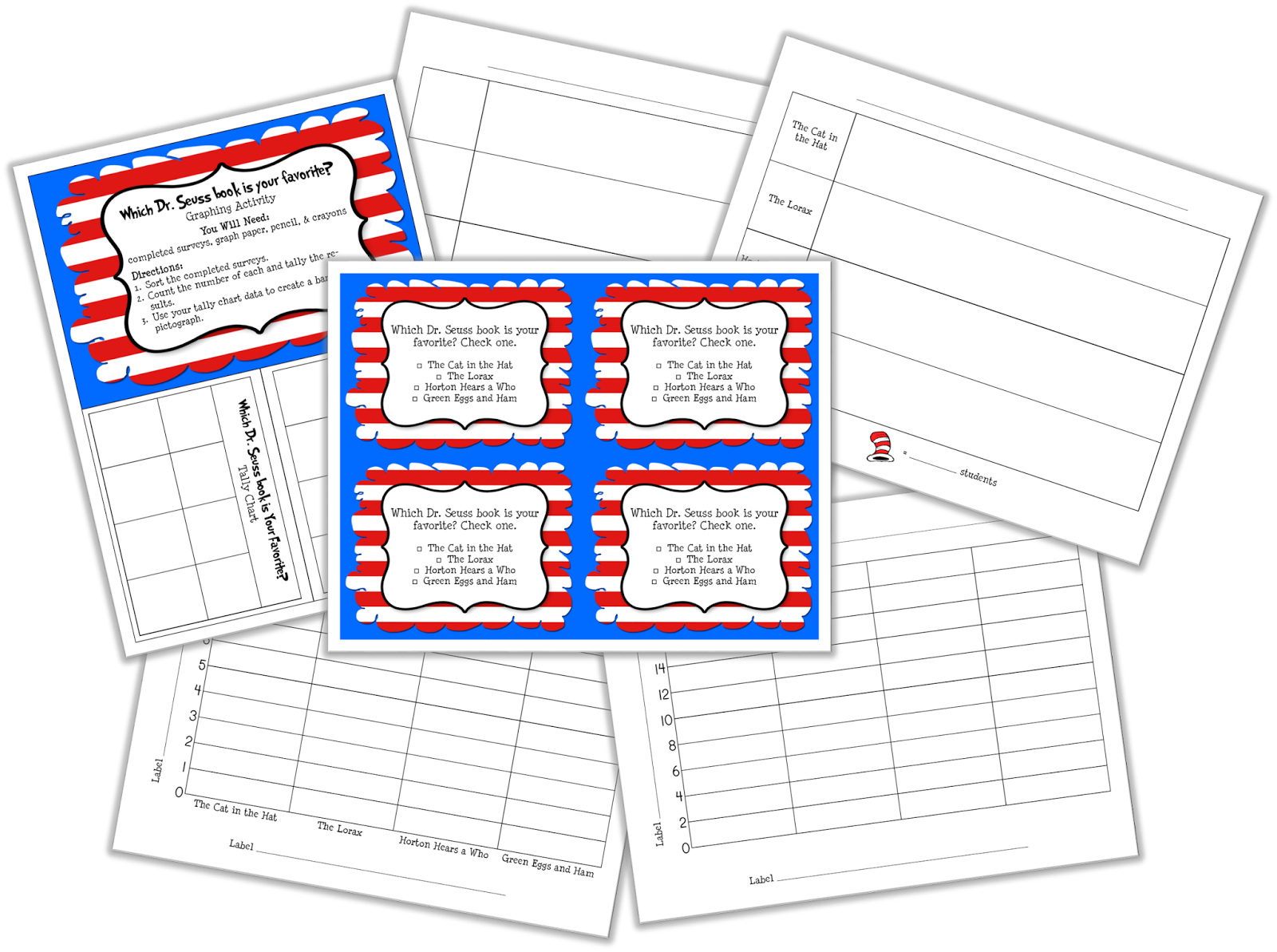
Good day to you!  Just wanted to share some goodies with you for celebrating Read Across America.  Please feel free to download my Celebrating Read Across America Math Games and "Which Dr. Seuss book is your favorite?" Graphing.  Both are great for use as guided math workstations/centers!


https://drive.google.com/file/d/0B_1w1VapXOL_ckFqcGppbGkwVFk/view?usp=sharing

https://drive.google.com/file/d/0B_1w1VapXOL_SGZwMHZEdHp2RWs/view?usp=sharing
The graphing activity comes with blank pages for choosing your own titles, and various graphing sheets are included as well. Enjoy!

ALSO--we would like to announce that we will be posting Sherry Parrish's Q&A this coming Wednesday.  We hope you will stop back to read her thoughts and suggestions about using number talks.


Until Wednesday...


Saturday, February 21, 2015

Fly on the Math Teacher's Wall -- February Hop -- Fractions!!

Welcome to another wonderful math blog hop!  This blog hop is devoted to fractions and will not disappoint--so after reading this post, take a hop around to see what goodies you will find from some amazing math bloggers!


Each of our Fly on the Math Teacher's Wall hops are devoted to squashing teacher and/or student misconceptions.  I am not really discussing a misconception, but I would like to focus on some key ideas I feel most important in helping my students develop a solid foundation in fractions that will be built upon as they progress from year to year. If students understand these key ideas, hopefully some future misconceptions can be avoided.

The following is the second grade Common Core Standard for fractions:

CCSS.Math.Content.2.G.A.3
Partition circles and rectangles into two, three, or four equal shares, describe the shares using the words halves, thirds, half of, a third of, etc., and describe the whole as two halves, three thirds, four fourths. Recognize that equal shares of identical wholes need not have the same shape.

There are several key ideas for understanding:
  • A whole represents all of something (1 whole).
  • A fraction represents part of a whole (for introductory understanding, this is important--as we know, a fraction can represent any number of equal parts--as with improper fractions, but students also need to understand when working with improper fractions that an improper fraction is greater than one whole.  This understanding will be developed in later years for my students.)
  • A fraction represents part of a whole that has been divided into EQUAL parts (for my students this understanding is developed with the use of circles and rectangles, not equal sized parts of a set)

How do I help my students develop a working understanding of each of the above ideas?

We begin our explorations by identifying objects that are in the form of a whole and those that are not.  We examine items around the classroom that are and are not whole (an unsharpened pencil vs. a sharpened pencil, a unopened Kleenex box vs. a box that is part full, etc), and I also bring in various items (cookies, bottles of soda, fruits, etc.) in whole and part form.  Items are sorted into two categories.  The group of items that are not whole are then labeled as fractions.

To help students understand that a fraction represents part of a whole that has been divided into equal parts, we explore wholes that have been divided into equal and unequal parts.  A lesson about equal sharing is done.  Students seem to understand the concept of equal parts when it is related to sharing the whole of something with a friend.  Posing various sharing scenarios with items divided into equal and unequal parts is helpful.  My kids love when I choose students to share my pizza and candy bar with. I divide both unequally, share with volunteers, and then ask my students if my sharing is fair.  This naturally leads to a discussion of how my sharing is not fair because the parts I shared were not equal.  I then ask students how the items CAN be shared equally.  They, of course, can always tell me.  We continue our explorations by cutting out circles and rectangles.  We fold the shapes to create equal parts, cut them out and create models.

Only after students have a solid understanding of these three ideas do we move on to the concepts outlined in the standard.  Guided math groups are easily formed based on what I have observed in our initial explorations.  In small groups I am able to further develop some students' understandings of the key concepts before moving on, work more with some students on partitioning wholes, and challenge those who already have understanding beyond the second grade standard.

UPDATE: Totally forgot to post these little gems that I use in guided math groups.  So simple to make and use. How could I have forgotten? Enjoy!


https://drive.google.com/file/d/0B_1w1VapXOL_Z18xQjh2N2VuVlU/view?usp=sharing

Providing multiple opportunities for independent practice is always important, so this is done in rotations while I am meeting with guided groups.  Options for practice are differentiated.  Please feel free to download a few of my activities for independent practice.

Four Leaf Fractions Board Game & Spinner


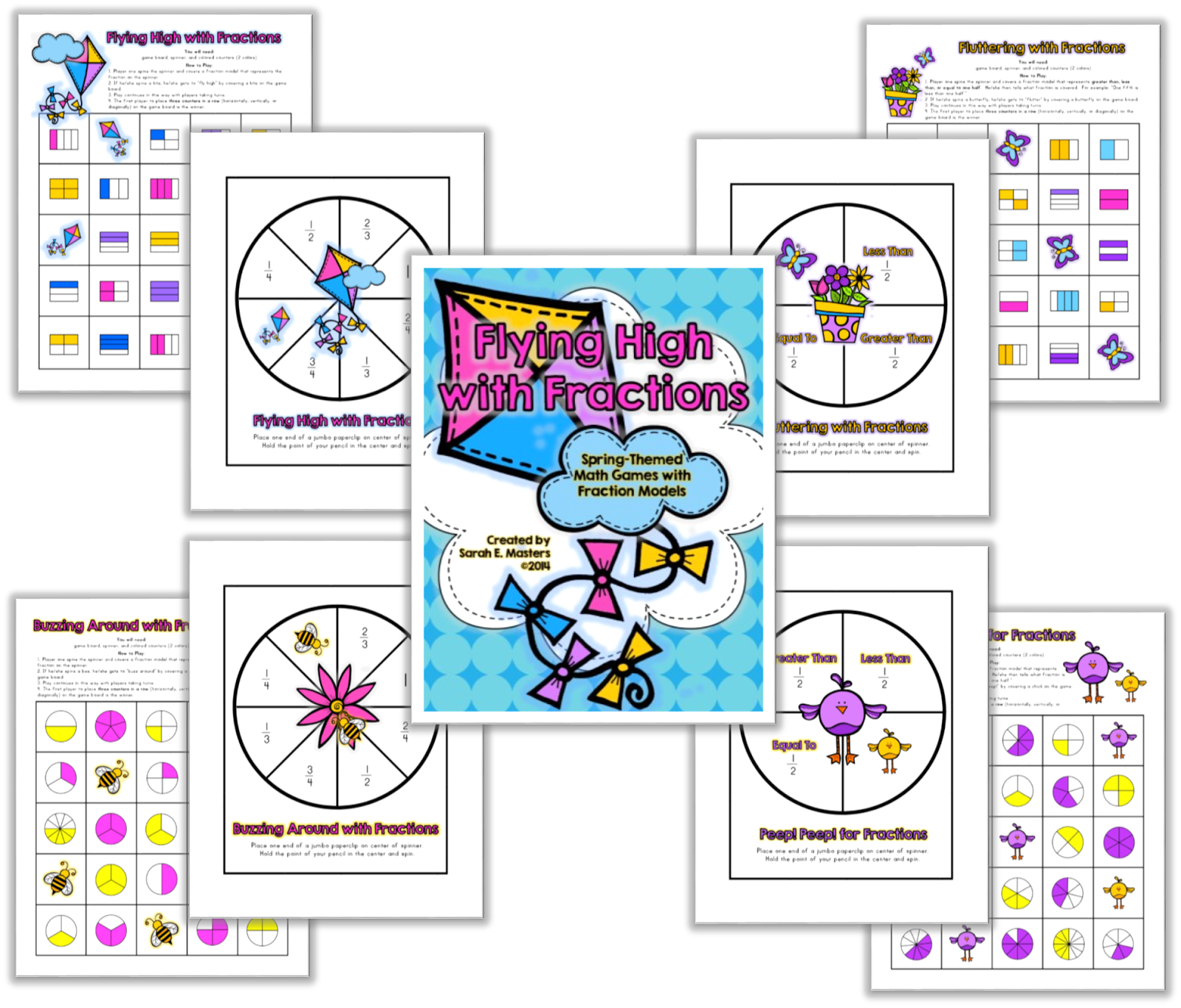
Flying High with Fractions Board Games & Spinners

https://docs.google.com/file/d/0B_1w1VapXOL_aERCRkhGT3ZYVVE/edit

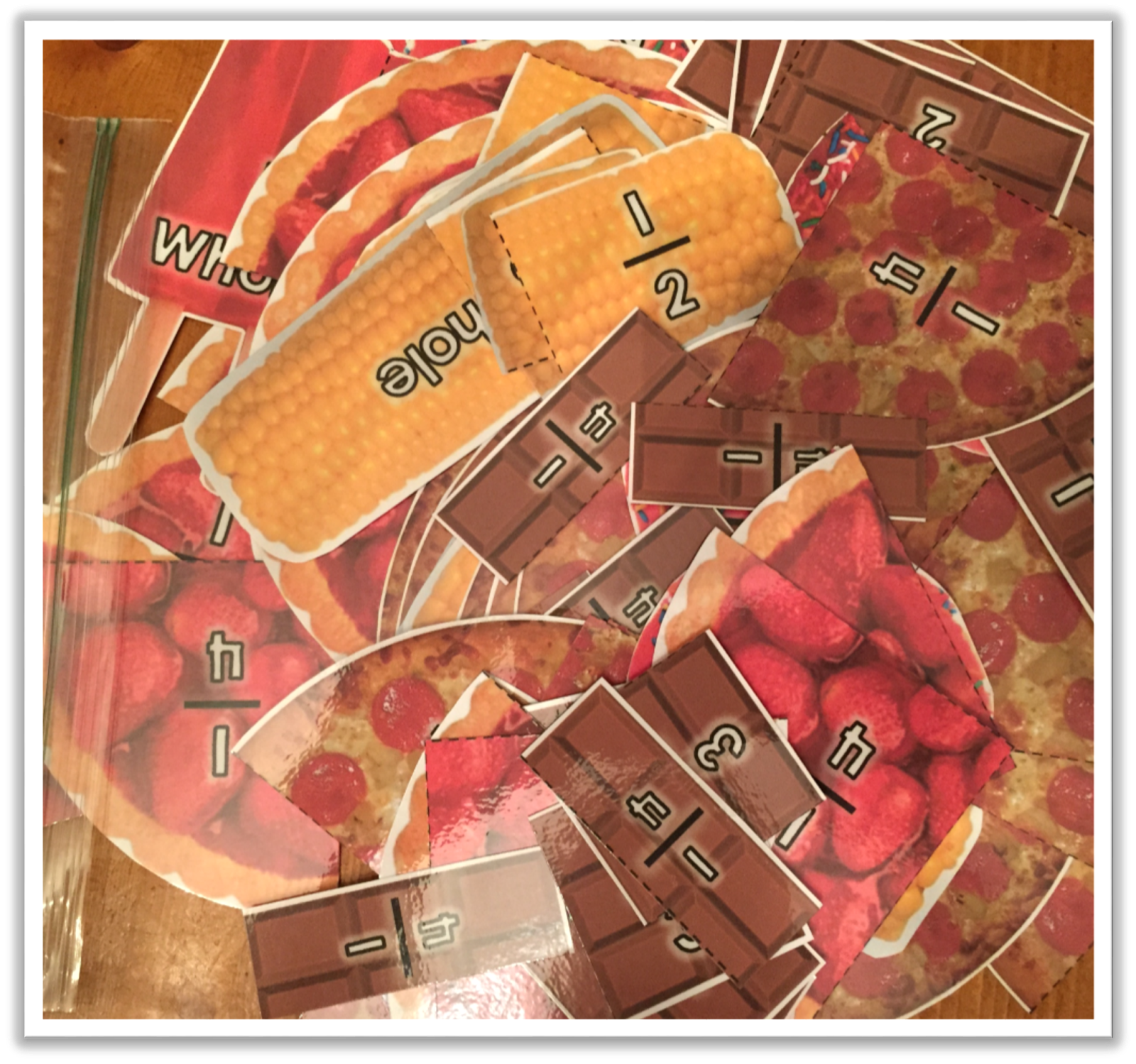
I have also made up some fraction foods you might be interested in using.  Foods are labeled and unlabeled.  These can be used in guided groups and for independent practice. I especially like to use the parts that are labled--in this way students can see that 3/4 is equal to 3, 1/4 pieces.  If you download this freebie, please take some time to share how you plan to use them by leaving a comment. Would love to hear your ideas!

https://drive.google.com/file/d/0B_1w1VapXOL_cDlvY29GREdEWmM/view?usp=sharing

Hope you have found something you can use with your students!

Please take the time to hop around to all of the participating bloggers.  Your next stop is Brandi from The Research Based Classroom!

Button

Happy hopping---

Saturday, February 14, 2015

Makin' It Math Mid-Month Linky -- Money, Money, Money!

Glad you stopped by! Welcome to our Makin' It Math Mid-Month Linky--a linky dedicated solely to math made-its.  If you are interested in linking up your math made-its, check out the details by clicking the logo below.  We would love to have you join us! 

http://www.guided-math-adventures.com/p/makin-it-math-mid-month-linky.html

Our kids have been working a lot with money in the past few weeks, and are quickly becoming money masters!  We thought we would give you an inside look at our explorations and share some made-its.

Our money explorations began with a simple pretest.  Students were asked to name each coin, tell the value of each coin, and count a small selection of coins (if able).  Students were pulled to do the assessment individually with real coins while other students were engaged in math game play.  This quick assessment made it easy to group students based on need.  Four groups were formed and guided instruction of small groups began.

Small Guided Math Groups

The following have been key in our small guided groups:
  • the use of coins that students can touch/feel and manipulate
  • mastery of coin identification and values before moving on to counting (some groups moved on sooner than others and students who showed mastery quickly were worked into a different group)
  • a gradual progression in coin counting (mastery of counting like coins and adding coins from least to greatest--pennies and nickels; pennies, nickels, and dimes; pennies, nickels, dimes, and quarters)
  • multiple opportunities to count random groups of coins and write the total value using numbers and symbols (students would count a collection of coins for the group two times and the other students in the group would agree/disagree, recount to check accuracy, and discuss order in which coins were counted)
  • acceptance and discussion of multiple ways of counting (including discussion of counting on coins to create landmark tens for ease of counting remainder of coins)
  • self and peer-evaluation and justifying of thinking
  • use of the open number line to illustrate how coins were counted
  • lots and lots of practice 


Students carefully counted in their heads as their peer counted aloud.  Students then agreed or disagreed and gave proof.  Discussions of how coins were counted (order) happened here as well.


Students showed their thinking with an open number line.


Students evaluated their peers and provided justification for their thinking.  The students on the left drew faces to provide evaluation for their fellow classmates as they worked their way from desk to desk around the room.

 Students showed multiple ways to represent a dollar.

Independent Practice

The following are a few independent practice opportunities we  provided for students to work on while meeting with guided math groups (differentiated based on each group's needs and all designed for practice of money skills).  Please feel free to download any you can use.  Some were created this year and others we have used for several years.
Math Journals:

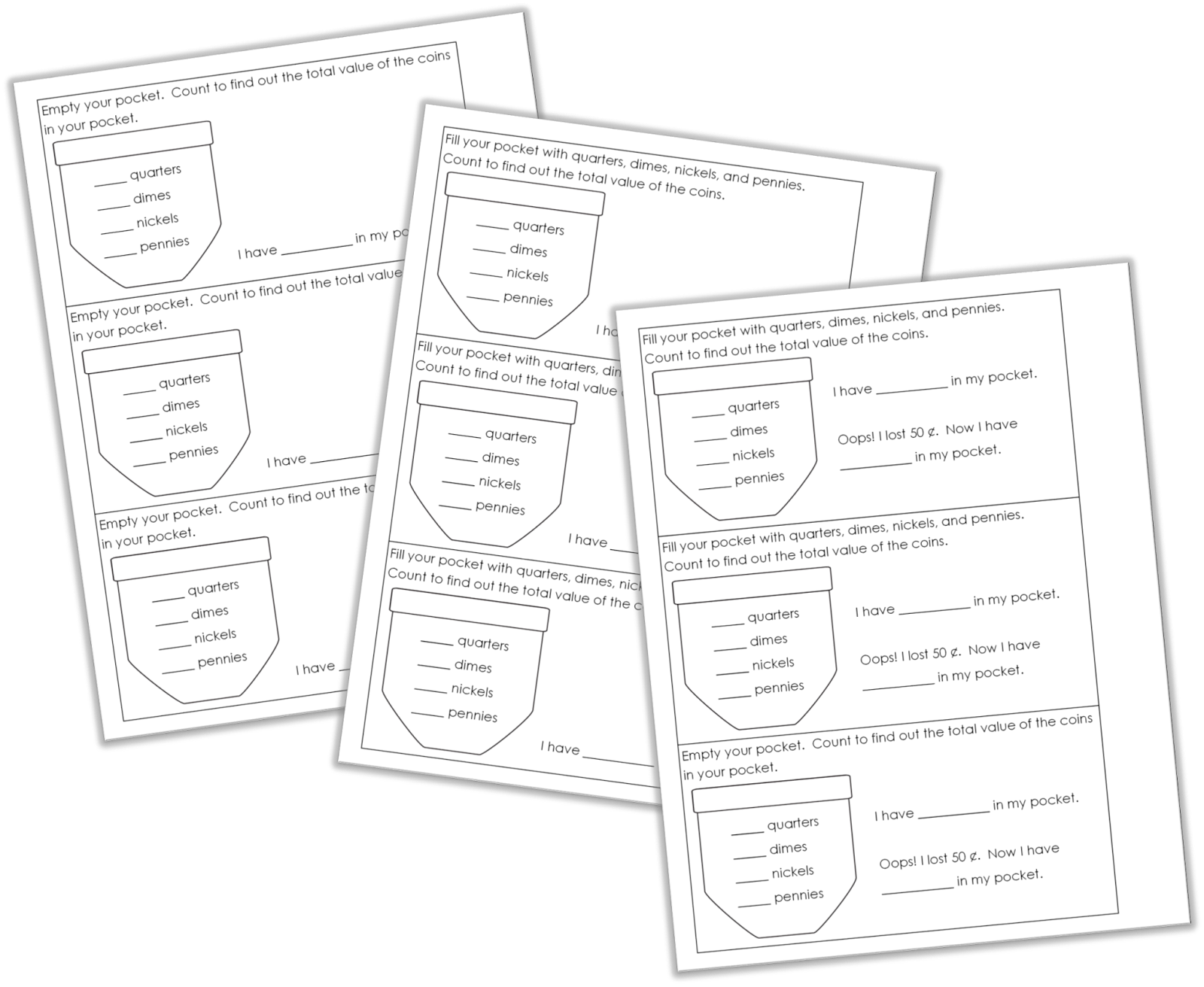
Coins in My Pocket Journal Prompts - These prompts can easily be differentiated.  My kids use half-sized notebook journals and simply cut and paste the prompts and solve.
https://drive.google.com/file/d/0B_1w1VapXOL_c3ZSeXFhZ1YyT3M/view?usp=sharing

"Show What You Know" independent tasks (premade/teacher created activity sheets, roam the room activities, Scoot activities, What's a Word Worth?, etc.) that can be used as assessment:

I don't find too many premade activity sheets that I like, but I inherited an OLD version of this workbook years ago. I think it's one of those for parents to use at home, not sure. It's great!  It follows a logical progression of practice from like coins to pennies and nickels, pennies/nickels/dimes, etc.  It also has some great problem solving sheets.  I pick and choose the sheets to use based on student need and place them in folders labeled A, B, and or C.  Cups of coins are always made available for use with these activity sheets.

What's a Word Worth?
--
I'm sure you have seen or used something like this before.  Students can use any word list and the coin key to figure out what each word is worth.  I have three different sheets made and labeled A,B, and C so students practice with the coins they can count independently.  

https://drive.google.com/file/d/0B_1w1VapXOL_dVNtN0tKTlFibWM/view?usp=sharing

Counting Coins Scoot:  Stop back to download soon!

Games:

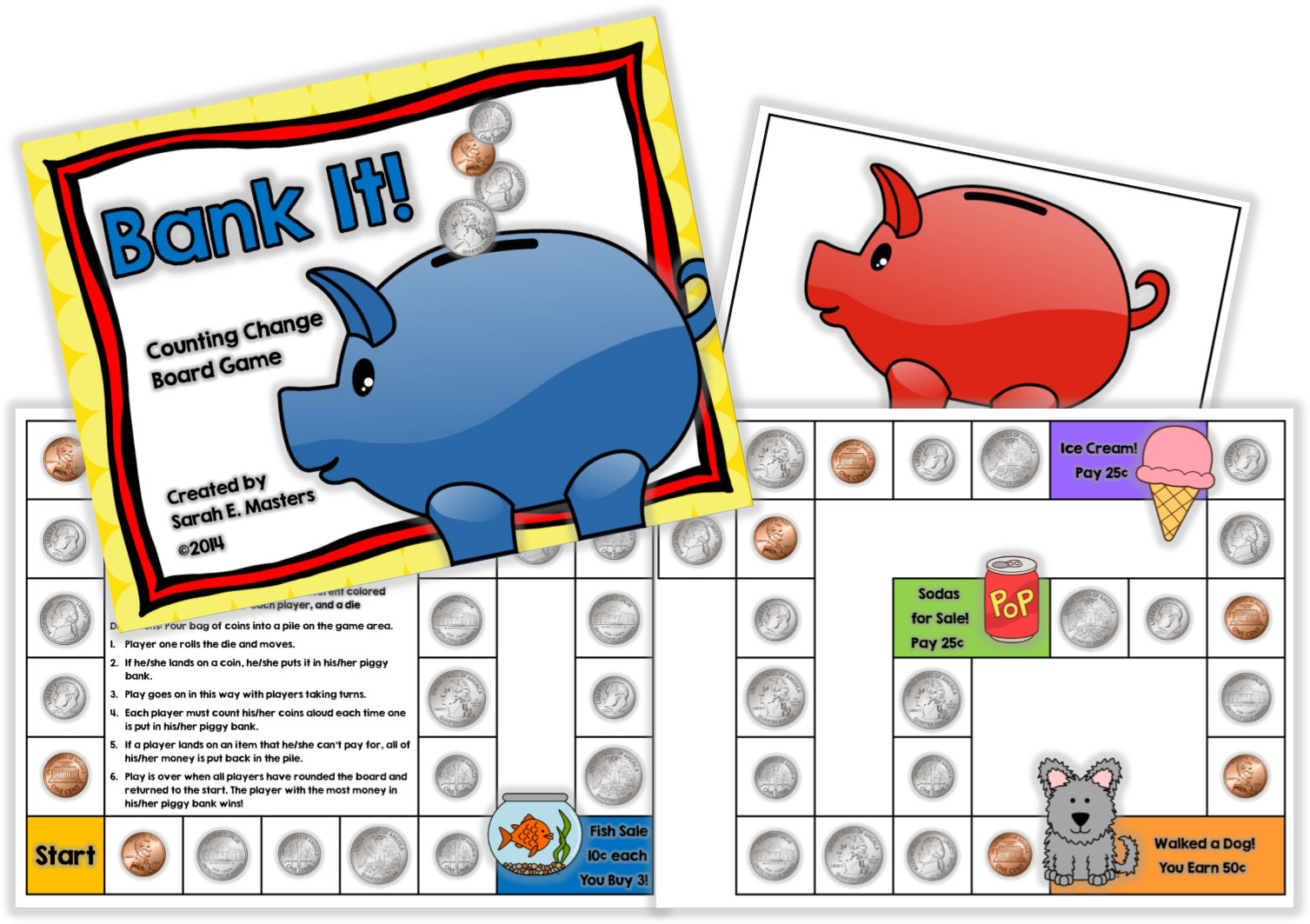
Bank It! Board Game -  This game can be played after students have learned to count pennies, nickels, dimes, and quarters.  It requires addition and subtraction of coins. My kids love this! Games like these are easy to send home for at-home practice. 


https://drive.google.com/file/d/0B_1w1VapXOL_X2p6QUNQYjJkNUk/view?usp=sharing

You may also like my This Little Piggy! Money Fun games on TpT.


Workstations (task cards, money bag activities, etc.):

Money Bags!: Coin Tasks - This differentiated workstation is used with bags of coins (fill with coins appropriate to student need).

http://www.guided-math-adventures.com/p/workstations-games_18.html
You may also like my Show Me the Money! task cards on TpT.

Assessment

Ongoing assessment is easily done in guided groups.  Much is assessed through observation.  Courtney and I also created a performance task that we use to assess students' levels of mastery.  Please feel free to download, Suzy's Piggy Bank.  If you use this task, we would love to hear your comments and thoughts about how it went.  Feel free to email us anytime!

Please share your thoughts and ideas in a comment OR link your blog post up with us!

All the best--


Monday, January 26, 2015

Number Talks Book Study -- Chapter 4

Welcome back--so sorry this post is a day late.  As they say, better late than never! Today we discuss Chapter 4 of Number Talks by Sherry Parrish--all part of our book study sponsored by The Elementary Math Maniac. It's a chapter all about number talks for the K-2 classroom.


To read past chapter posts, visit the Number Talks Book Study Archive! 

Chapter 4: How Do I Design Purposeful Number Talks for the K-2 Classroom?

Chapter 4 is nicely organized into sections for kindergarten, first, and second grade.  Even though I am a second grade teacher, I found it important to delve into the other grades as well.  I recently began number talks in the whole group setting, but I have always had "chats", as we call them, in small guided math groups.  For this reason, the information present for each grade level is equally as valuable.  Plus, I think it important to understand where our kids come from and where they are headed.

I will try to discuss the essence of the information presented for each grade level.  In order to benefit fully from this chapter, that also presents numerous examples of number talks that can be used at each grade level, you will need to get a copy of the book--highly recommended. :0) At the same time, I have inserted a couple of kindergarten number talk videos for those who do not have the book.

The chapter begins by overviewing the contents of the chapter and the focus of number talks at each grade level: kindergarten--fluency, first grade--addition, and second grade--addition and subtraction.

In kindergarten, the focus of number talks should be talking about numbers, counting, building fluency with small numbers, and one-to-one correspondence. Additionally, all of the skills mentioned can be developed through the use of dot images, rekenreks, and five and ten frames.

Dot Images

What is a dot image?  A dot image is simply a specific number of dots arranged in a particular way.

Why use dot images? Parrish stresses that dot images provide opportunities for students to work on counting, subitize, see numbers in different ways, and learn different combinations of numbers.

Here's a great article about subitizing:
Subitizing: What is It? Why Teach It?

You can also check out the following video of a kindergarten number talk using ten frames and dot images.  It is one of the videos included on the DVD that accompanies the book (found on YouTube). It's wonderful to hear kindergartens verbalizing their understanding.


Dot images are SO simple to make. Got some index cards and dot stickers (found by the garage sale tags)? You have all you need to create!  I also like to use paper plates--a little tip that I was given a few summers ago.

Rekenreks

What is a rekenrek? A rekenrek has two strings of beads positioned parallel to one another.  Each string has ten beads of two different colors (typically red and white). One row of beads can be used at a time (fluency to 10), or both strings can be used together (fluency to 20).

Why use rekenreks? Rekenreks help students see the relationship between numbers, subitize, and build fluency.

You will find a wonderful series of number talks using the rekenrek (from 3 to 10) for kindergartens in chapter 4.

Also, enjoy the following rekenrek number talk from MathSolutions (also included on DVD) from YouTube.  


As you see in the video, the kindergartners are using homemade rekenreks.  

Rekenreks to Purchase

Digital Rekenreks
Brilliant Beadstring (ictgames.com)
Number Rack (iPad app)

Five and Ten Frames

Nowadays, I would say most teachers know what five and ten frames are.  Five and ten frames are excellent for helping students visualize addition and subtraction, understand place value, subitize, and build fluency.  

As you saw in the first video, ten frames can easily be used in number talks and powerful discussions and reasoning arises.

Parrish provides a collection of five and ten frame number talks.  I especially liked her discussion of how posing different questions about ten frames can change the purpose and focus of each ten frame.

Need ten frames? Feel free to download this freebie!

In first grade, dot images, rekenreks, and ten frames are equally as important, yet you will see number sentence number talks (addition) are also included in the chapter.  The three tools, along with number sentences, are nicely interwoven by strategy from counting all/counting on, doubles/near doubles, to making ten.  This allows a natural progression from the use of tools to number sentences.

Second grade number talks are designed to "foster specific computation strategies". For this reason,  you will find that the number talks presented are organized by strategy and categories. Categories include: introductory number talks that encourage a specific strategy, number talks for students that are successfully using a selected strategy, and those for students to use and extend a targeted strategy.

As a second grade teacher, I have found this especially useful.  Addition and subtraction number talks are presented with simple instructions for each.  I choose my number talks carefully, and Chapter 4 is a great resource along with the equations I design myself.

If you teach K-2, I am sure you found, or will find, this chapter just as useful as I did!

We would love to hear your experiences with number talks or your thoughts about using them with your students.  Please feel free to share in a comment!

AND, keep those questions coming! Sherry Parrish, the author of Number Talks, will be doing a Q&A after the completion of our book study! Feel free to email us with any questions you have for Sherry. You may send questions to guidedmathadventures@gmail.com. Thanks go out to Sherry!


Lastly, stop back this Sunday for Chapter 5: Student Thinking and Number Talks in the 3-5 Classroom!  Looking forward to it!

All the best--


Sunday, January 25, 2015

A Hundred Days Smarter & Number Talks Chapter 4 to Come Tomorrow...

Hello!  Today I come to you with news of a delay.  I got up to do my Number Talks Chapter 4 post this a.m. and discovered I had left the book on my desk at school.  SO, I will have to ask you to stop back tomorrow night to read my discussion of Chapter 4.  My apologies!

BUT you just might be interest in my A Hundred Days Smarter math workstations for celebrating the 100th day of school.

I updated the stations I did last year and added one.  I would like to share them with you!  Simply click the pic below to download your copy.  They will be used as workstations while I work with guided math groups.

Our 100th day is next Monday!  If yours has past, hope you had fun! If yours is still to come, hope these can be of use.  Enjoy!

https://drive.google.com/file/d/0B_1w1VapXOL_cGozVHctNGRhcEE/view?usp=sharing

Please look for my Number Talks discussion of Chapter 4 to be posted tomorrow evening! To read past book study posts, visit the book study archive.

Smiles,


Wednesday, January 14, 2015

Number Talks Book Study - Chapter 2, Cont. & Makin' It Math Linky

Good day! Today's post serves two purposes---the continuation of our book study of Number Talks, by Sherry Parrish, and our mid-month Makin' It Math linky.  Therefore, make-its will be intertwined in a discussion of Chapter 2.


To read my previous Number Talks discussion of Chapter 1, and the beginning of Chapter 2, please CLICK HERE!

Chapter 2: How Do I Prepare for Number Talks, continued.

First, I would like to share how my students got prepared for number talks.  My students do A LOT of talking about math--explaining their thinking, justifying their solutions, comparing/contrasting their strategy use with that of their classmates, assessing the reasonableness of solutions--all while showing respect for their fellow classmates. BUT, I wanted to introduce my students to the Number Talk procedures outlined in the text because there were components of number talks that I had not used. I felt my students would benefit greatly from the consistency in procedures as well.

We began, as we do with anything "new", by making a list of expectations.  We did this at the beginning of the year when preparing for what we call math "chats", so I thought it fitting to do the same with number talks.  I talked to my students about how a number talk would work and asked them to generate a list of behaviors they felt would be important to show during this time. It's interesting how the first two behaviors on their list are almost directly stated from our social skills program and are quite fitting.  Loved how "think together" was put on the list.  I helped them with the word "praise" as a description of the kinds of positive things we say to one another when sharing ideas, even when there are some errors in thinking.


I also introduced the silent hand signals they would be using during number talks.  We practiced them several times before having our first "official" number talk. The signals are posted as reminders, yet they will not be needed long...  Feel free to download these simple posters by clicking the pic below.

https://drive.google.com/file/d/0B_1w1VapXOL_dVIxVHFSYTduZEU/view?usp=sharing

I felt my students were ready to go, so I had to make sure I was ready.

Chapter 2 helped to prepare me...

After sharing four procedures and expectations essential to number talks, Sherry Parrish goes on to help teachers understand how important it is to anticipate the ways students will come to a solution. She suggests thinking through the possible strategies students may use to solve a given problem.  Even if you are not able to anticipate all of the strategies students will use, preparing yourself ahead of time in this way will increase your ability to understand what is being shared during the number talk.  Parrish also stresses the importance of thinking about how you will record students' thinking so that it clearly illustrates each strategy for students.

Below you will see some pictures of how I recorded students' thinking during two different number talks.  I will be recording on the SmartBoard just as soon as my computer glitches are fixed.  This will be a nice way to store records for easy reference.  For now, I am doing it on chart paper.

I chose the problems carefully as suggested early in chapter 2.  The majority of my students' understanding of place value is strong, and many use this understanding when adding two digit number, yet I wanted the whole class to see how making a landmark or "friendly" number can work (a strategy that some students have worked with in small guided math groups). 


Would love to hear your comments about what you see recorded.  Why do you think solutions are crossed out with names written next to them in the second pic? What do you notice about Abbi's thinking from one day to the next? 

As I reflect, one of my goals will be the addition/breaking up of each place value as described in the text to illustrate the separation of each digit's value in a different way.

Example:
29 + 29
(20 + 9) + (20 + 9)
(20 + 20) + (9 + 9)

Have I said how much I love number talks already??

Moving on...

I am sure many of you thought about student accountability when reading. I did. Parrish makes six wonderful suggestions for developing students' accountability:

  • Ask students to use finger signals to indicate the most efficient strategy.
  • Keep records of problems posed and the corresponding student strategies.
  • Hold small-group number talks throughout each week.
  • Create and post class strategy charts.
  • Require students to solve an exit problem using the discussed strategies.
  • Give a weekly computation assessments.

AND--What if students still need to develop mental reasoning?  Make manipulatives accessible, and use tools such as number lines, hundred charts, rekenreks, and ten frames as appropriate for developing conceptual understanding that is foundational to mental reasoning.

Finally, Parrish suggests five small steps toward teaching for understanding:

  • Start with small problems to elicit thinking from multiple perspectives.
  • Be prepared to offer a strategy from a previous student.
  • It is all right to put a student's strategy on the back burner.
  • As a rule, limit your number talks to five to fifteen minutes.
  • Be patient with yourself and your students as you incorporate number talks into your regular math time. 

In the coming chapter readers receive support for developing specific strategies in their K-2 classrooms.  Hope you will stop back this coming Sunday for a discussion of Chapter 3! 

Now, some WONDERFUL NEWS!

Sherry Parrish, the author of Number Talks, will be doing a Q&A after the completion of our book study! We are collecting questions now, so feel free to send in any questions you have for Sherry from now up until the first week in February. We will also include a reminder in each of our book study posts. You may send questions to guidedmathadventures@gmail.com. Thanks go out to Sherry!


Last, but not least, we would love for you to leave your comments and link up any math made-its you would like to share!

Smiles,


Friday, January 2, 2015

It's a New Year!!

It's a NEW YEAR--a Happy New Year to you!!

It's that time of year--time to celebrate and look ahead...

To help you celebrate a new year, I have created a couple of FREEBIES for you.  Enjoy my Winter Walk-About problem solving activity and Winter Friends math games.  Simply click each pic to download!

Update:  Please redownload my Winter Friends math games, as there was an error on the "In the meadow..." game board. Sorry for the error!

https://drive.google.com/file/d/0B_1w1VapXOL_OXd1WlBpZmMzcWM/view?usp=sharing

https://drive.google.com/file/d/0B_1w1VapXOL_SWtlbi0yN2hSZ1E/view?usp=sharing

AND just wanted to share a few of our blogging plans for the year ahead...

  • share new-found knowledge (for example, book studies)
  • provide a closer-look into our work with students in guided math groups
  • add read and reflect sheets for use with math mentor texts (see Resources on navigation bar)
  • continue to network with fellow math bloggers

We look forward to another great year with you!

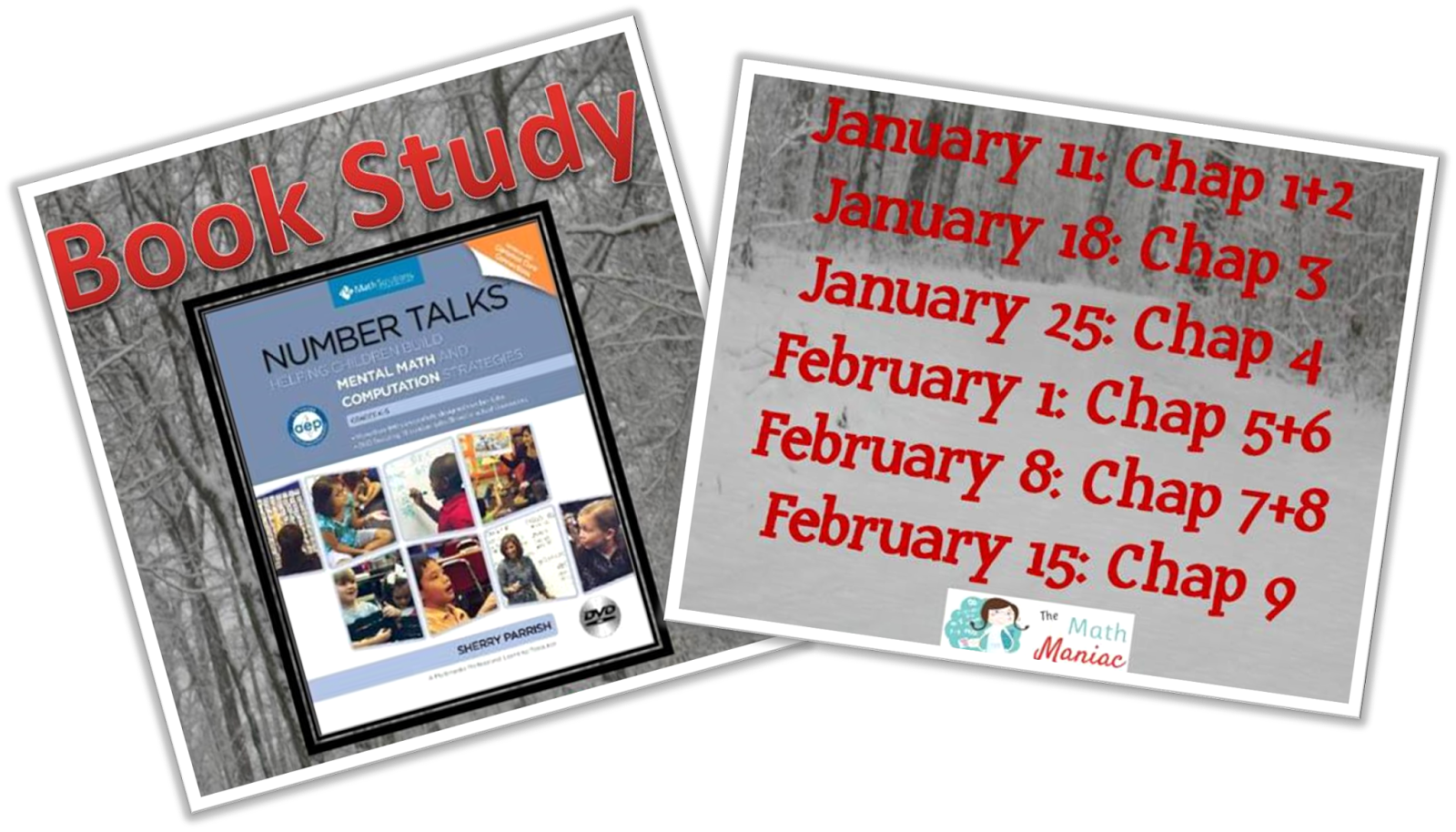
To start it off, please feel free to join us as we participate in a new book study of, Number Talks by Sherry Parrish, sponsored by The Elementary Math Maniac.  We will do our best to keep up!  See the schedule below.


All the best to you and yours for a fabulous new year!


Friday, November 14, 2014

Makin' It Math! Mid-Month Linky -- November

Welcome to November's Makin' It Math! linky! So glad you stopped by!


In the past month, I have put together some math tool bags for the kids to use at home. Tool bags were sent home after talking with parents at parent-teacher conferences in October.

************************************

The following information is posted on my classroom website for parents, but it also gives you an overview of math tool bags and how they are used at home.


What are math tool bags?

Math tool bags house various math tools, games, and activities for at-home math practice.

What is in my child's math tool bag?

Various tools/items are housed in your child's bag.  Tools may include, but are not limited to---dice, clear colored counters, place value cubes, a number line, ten frame/number cards, and paper base ten tools. Not all bags contain the same tools/items (based on student need).

What should I know about my child's tool bag?

  • Tool bags are to be kept at home in a safe place.
  • Your child should take pride in caring for his/her tools for extended use. 
  • The tools in the bag are to be used for at-home math work and games.
  • The tools should not be used in any other way (as toys, for other games, etc.)
  • Your child will be able to keep all items in his/her bag at the end of the school year (unless otherwise noted when sent home).
  • Math games sent for home practice should be kept in the math tool bag.
  • Additional items will be sent home at various times of the year and should be added to your child's tool bag.

When should my child use the items, activities, and games in his/her bag?

Your child can use the items in his/her bag for at-home math practice at ANY time.  Activity/game suggestions will be noted periodically on your child's "My Responsibilities" Sheet and materials will be sent home.  Nothing needs to be returned to class as proof of at-home practice.  It is strongly recommended that your child work with his/her bag on a regular basis.

************************************ 

The following items were sent home in everyone's math tool bag.  I have included links to various item--where they can be found and freebie printables.


Additional tools/items were sent home in tool bags depending on need.

Bags were purchased at The Library Store--See size and pricing information here!  2 gallon Ziplock bags would be less expensive and work well, too.

Periodically, I send home games/activities. Any games/activities are used in guided math groups/rotations prior to sending them home.

  • one page math games
  • spinner games
  • place value cube activities
  • dice games
  • card games
  • word problems
  • etc.

I hope you will find some of the items useful.  My kids LOVE these bags--I often hear comments about at-home activities/game play and have received positive comments from parents. :0)

Please feel free to link up your math made-its!

All the best for a wonderful weekend!


Saturday, October 25, 2014

You Better HOP Around!: Fly on the Math Teacher's Wall--A Math Blog Hop!

Welcome to another wonderful math blog hop!  This blog hop is devoted to place value and will not disappoint--so after reading this post, take a hop around to see what goodies you will find!


Place value--a huge topic, and such an important concept for ALL ages!

As a second grade teacher, place value is at the heart of much of our explorations in math throughout the year.  Since I cannot possibly put everything I feel to be important about place value into this post, I will focus on some MUSTs in helping my students understand place value and build a solid foundation for what will follow.

THE POWER OF 10!
We as teachers know the power of 10 in our number system and how an understanding of 10 is a ESSENTIAL for building an understanding of hundreds, thousands, and so on.  I make a point of mentioning the power of 10 to my students DAILY! Any chance I get, I recite the words, "Ha--the POWER of 10!" in a sinister witch-like cackle.  They always chime in afterward! :0)  In the beginning of the year, it's a mixed bag as far as students' understanding that 237 has 23 tens and that 23 tens is the same as 230.  I like to use various prompts for students to agree or disagree with that require their use of 10.  Here is a picture of our Bright Ideas board and the first math prompt I gave this year (the board is used for all content areas). You can see the diversity of understanding with some thumbs being in the middle to show an inability to decide.  Prompts such as these bring with them wonderful discussions and students must justify their thinking.


PLACE VALUE TOOLS!
When I say tools, I mean beans, linking cubes, straws, ten frames, base ten tools, place value arrows, place value discs, an open number line, etc.  Representing numbers in multiple ways is a MUST!

At the same time, I feel it is also important for students to understand the power of different tools as well as their limitations.  An example--from the very first day of school, we do Daily Math (includes a number of the day) as a large group (this eventually leads to work in guided math rotations).  We begin with two digit numbers and eventually progress to three digit numbers.  In the beginning we use ten frame tools (small individual ten frames) to represent numbers.  The ten frame is a familiar tool used in kindergarten and first grade, so this is a great place to begin.  As we venture into representing greater numbers, students begin to understand the limitation of using ten frames for representing and drawing ten frame models.  The tools become less efficient/appropriate in this way, so a different tool is introduced (base ten tools).  We talk about each tool, their benefits and drawbacks.  We NEVER say a tool is BAD---or that it is WRONG to use a particular tool, but I feel it is important for students to understand the differences between tools and their effectiveness/applications.  Furthermore, I never begin using a tool with students, such as base ten tools or place value discs, unless they have a conceptual understanding of each disc's value.

Tools are ALWAYS readily available for students to use during guide math rotations--they never need to ask for permission.  Tools are also housed in our guided math area for easy access during small guided math groups. Please enjoy the following freebie tools that are posted under Workstations & Games on our navigation bar.  In addition, I have shared an open number line post from our other blog, Hoots N' Hollers, that you may be interested in. Enjoy!

A Powerful Tool: The Open Number Line 

PLEASE NOTE: Courtney will be sharing a new place value tool she has just added to her classroom. Look for her post about Digiblocks in the near future!  

TALK IT!
When I say "talk it" I mean constantly talking about numbers as a composition of digits that have value.  When we add 36 and 45, we are adding 3 tens and 4 tens--6 ones and 5 ones.  We talk it!  This eventually leads to reciting our addition of place values or composing/decomposing when mentally adding .  As a kid, this is one thing that was never done, at least to my recollection.  The algorithm was the focus, and an understanding of place value and talking about digits and their values was not at the forefront. Undoubtedly, there were those that understood what was going on when using addition and subtraction algorithms at a young age, but for those of us who struggled there was a lack of conceptual understanding beyond the steps we took to solve.

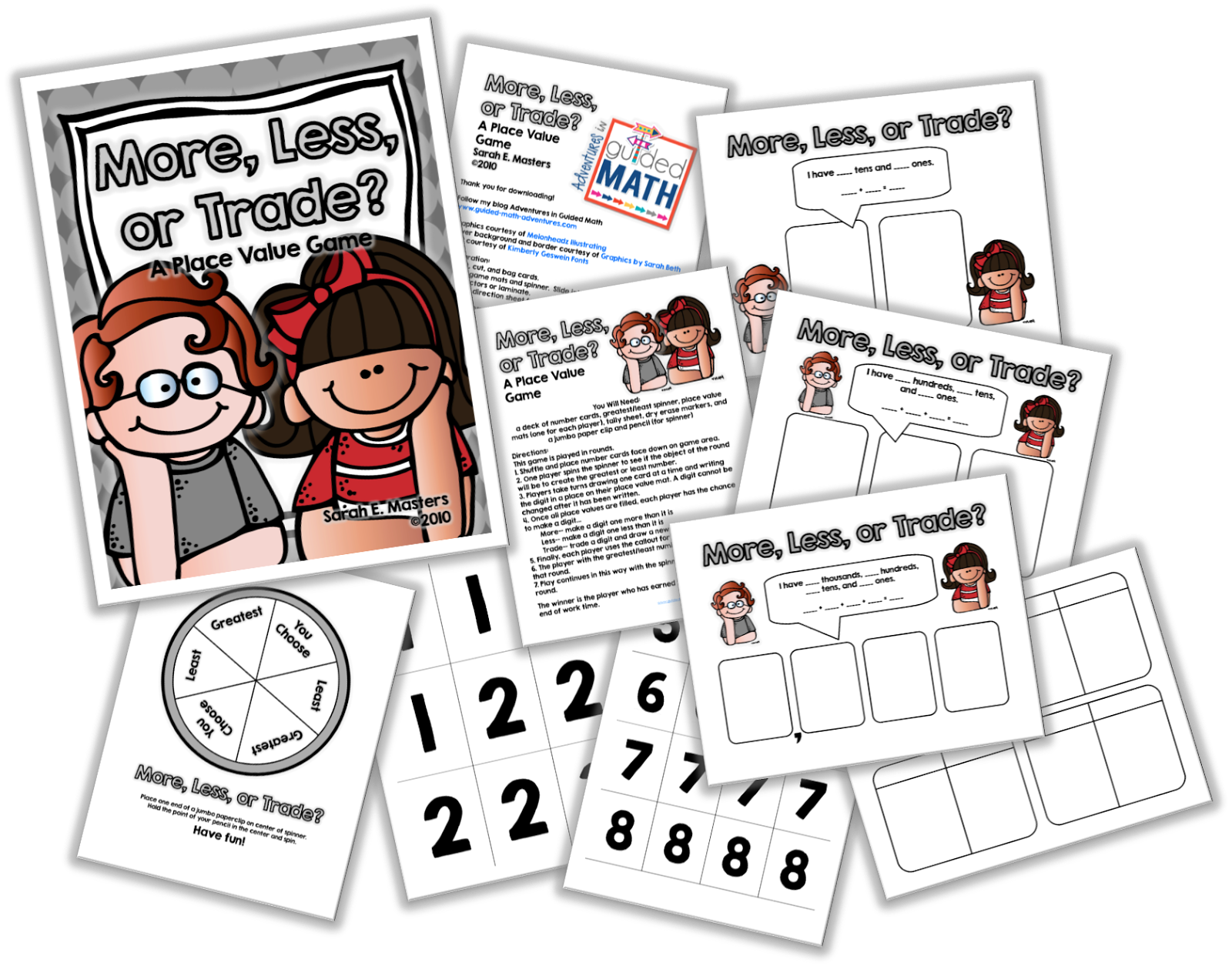
One thing I require in all place value game play is the use of callouts so that students are continually focusing on the value of each digit in a number. Feel free to download this fun place value game that my students play--More, Less, or Trade?.  Hope your kids enjoy it as much as mine have over the years!

https://drive.google.com/file/d/0B_1w1VapXOL_d1MwaGU5VVl6ZkE/view

INDEPENDENT PRACTICE!
I provide LOTS of independent place value practice for my students during guided math rotations.  Workstation games and activities are cycled throughout the year.  Place value cube activities are one of their favorites.  I have included a link where you can learn about the use of place value cubes and download directions for making your own.  There are so many possibilities for using these little buggers!


I hope you have found something that will be of use to you as you help your students develop a strong foundation.

BEFORE YOU HOP ALONG...

Feel free to sign up for the following giveaways!

The Number Line by Jeff Frykholm, Ph.D.

If you haven't already, read about using an open number line in my blog post referenced above.  Then enter to win!

a Rafflecopter giveaway

Place Value Cube Activities Pack

Enter to win some great place value cube activities that can be used in guided math groups and as workstations/centers.

http://www.teacherspayteachers.com/Product/12-Place-Value-Cube-Activities-How-to-Make-Them-773266
a Rafflecopter giveaway

Now, HOP ALONG!!  Please take the time to visit Susan at The Math Spot!

http://polkadotsandteachingtots.blogspot.com/2014/10/fly-on-math-teachers-wall-teaching.html

A thank you also goes out to Brandi from The Research Based Classroom for organizing another AWESOME blog hop!

Smiles,