

Our kids have been working a lot with money in the past few weeks, and are quickly becoming money masters! We thought we would give you an inside look at our explorations and share some made-its.
Our money explorations began with a simple pretest. Students were asked to name each coin, tell the value of each coin, and count a small selection of coins (if able). Students were pulled to do the assessment individually with real coins while other students were engaged in math game play. This quick assessment made it easy to group students based on need. Four groups were formed and guided instruction of small groups began.
Small Guided Math Groups
The following have been key in our small guided groups:
- the use of coins that students can touch/feel and manipulate
- mastery of coin identification and values before moving on to counting (some groups moved on sooner than others and students who showed mastery quickly were worked into a different group)
- a gradual progression in coin counting (mastery of counting like coins and adding coins from least to greatest--pennies and nickels; pennies, nickels, and dimes; pennies, nickels, dimes, and quarters)
- multiple opportunities to count random groups of coins and write the total value using numbers and symbols (students would count a collection of coins for the group two times and the other students in the group would agree/disagree, recount to check accuracy, and discuss order in which coins were counted)
- acceptance and discussion of multiple ways of counting (including discussion of counting on coins to create landmark tens for ease of counting remainder of coins)
- self and peer-evaluation and justifying of thinking
- use of the open number line to illustrate how coins were counted
- lots and lots of practice

Students carefully counted in their heads as their peer counted aloud. Students then agreed or disagreed and gave proof. Discussions of how coins were counted (order) happened here as well.

Students showed their thinking with an open number line.

Students evaluated their peers and provided justification for their thinking. The students on the left drew faces to provide evaluation for their fellow classmates as they worked their way from desk to desk around the room.

Students showed multiple ways to represent a dollar.
Independent Practice
The following are a few independent practice opportunities we provided for students to work on while meeting with guided math groups (differentiated based on each group's needs and all designed for practice of money skills). Please feel free to download any you can use. Some were created this year and others we have used for several years.
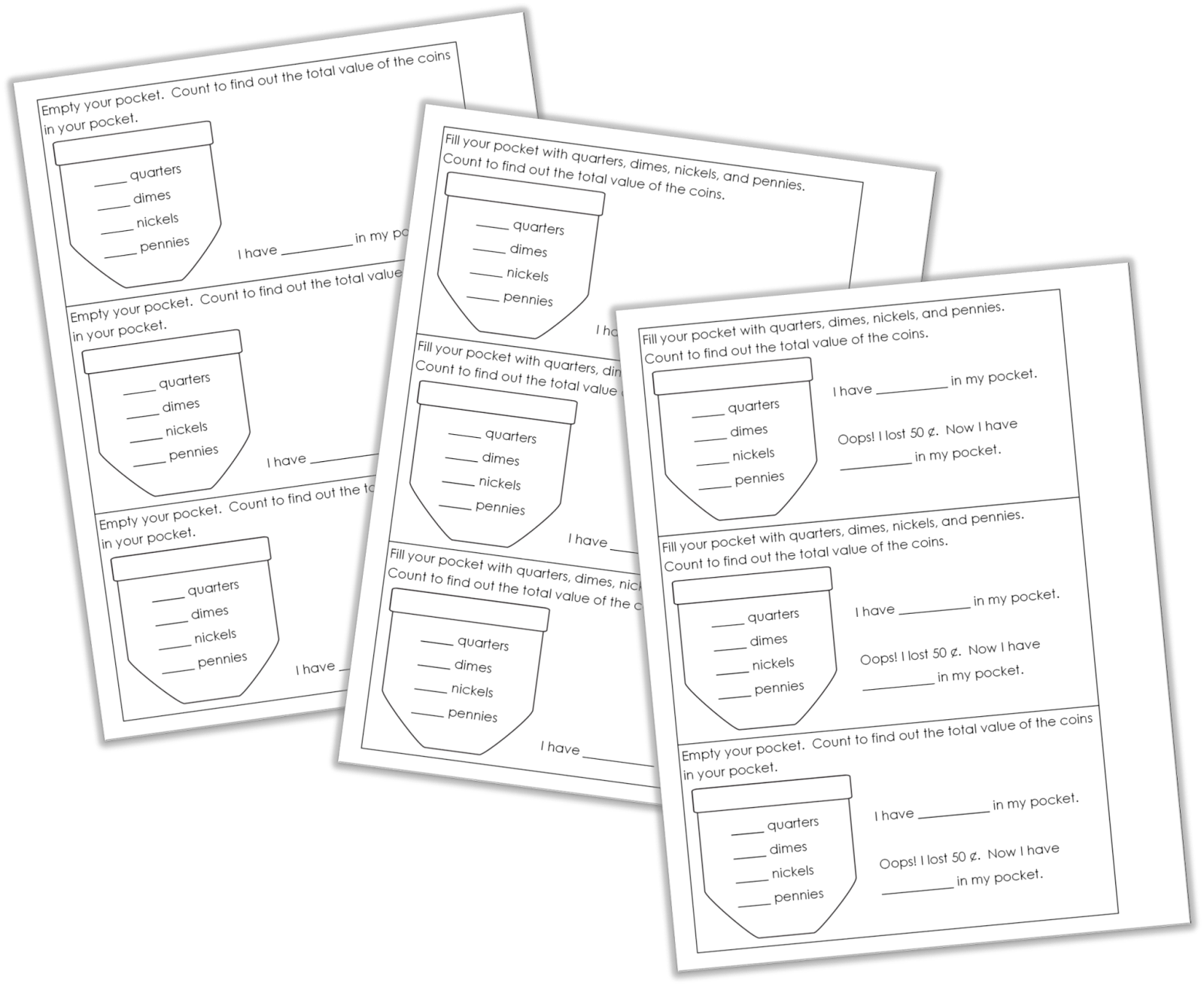
Coins in My Pocket Journal Prompts - These prompts can easily be differentiated. My kids use half-sized notebook journals and simply cut and paste the prompts and solve.
"Show What You Know" independent tasks (premade/teacher created activity sheets, roam the room activities, Scoot activities, What's a Word Worth?, etc.) that can be used as assessment:
 I don't find too many premade activity sheets that I like, but I inherited an OLD version of this workbook years ago. I think it's one of those for parents to use at home, not sure. It's great! It follows a logical progression of practice from like coins to pennies and nickels, pennies/nickels/dimes, etc. It also has some great problem solving sheets. I pick and choose the sheets to use based on student need and place them in folders labeled A, B, and or C. Cups of coins are always made available for use with these activity sheets.
What's a Word Worth? -- I'm sure you have seen or used something like this before. Students can use any word list and the coin key to figure out what each word is worth. I have three different sheets made and labeled A,B, and C so students practice with the coins they can count independently.

Counting Coins Scoot: Stop back to download soon!
Games:
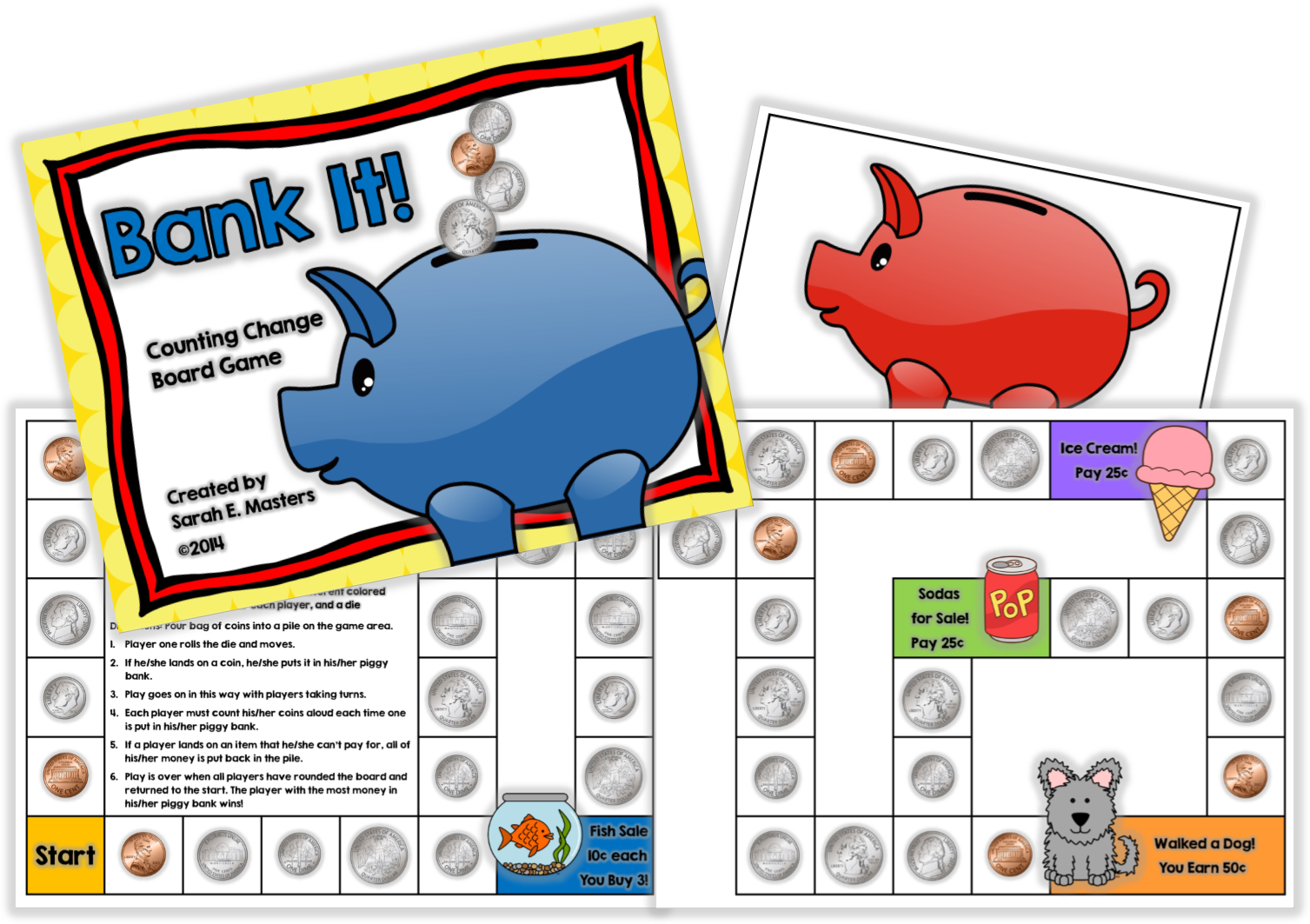
Bank It! Board Game - This game can be played after students have learned to count pennies, nickels, dimes, and quarters. It requires addition and subtraction of coins. My kids love this! Games like these are easy to send home for at-home practice.
You may also like my This Little Piggy! Money Fun games on TpT.
Workstations (task cards, money bag activities, etc.):
Money Bags!: Coin Tasks - This differentiated workstation is used with bags of coins (fill with coins appropriate to student need).

Assessment
Ongoing assessment is easily done in guided groups. Much is assessed through observation. Courtney and I also created a performance task that we use to assess students' levels of mastery. Please feel free to download, Suzy's Piggy Bank. If you use this task, we would love to hear your comments and thoughts about how it went. Feel free to email us anytime!
Please share your thoughts and ideas in a comment OR link your blog post up with us!
All the best--


